
Obergurgl, Ötztal, Tirol
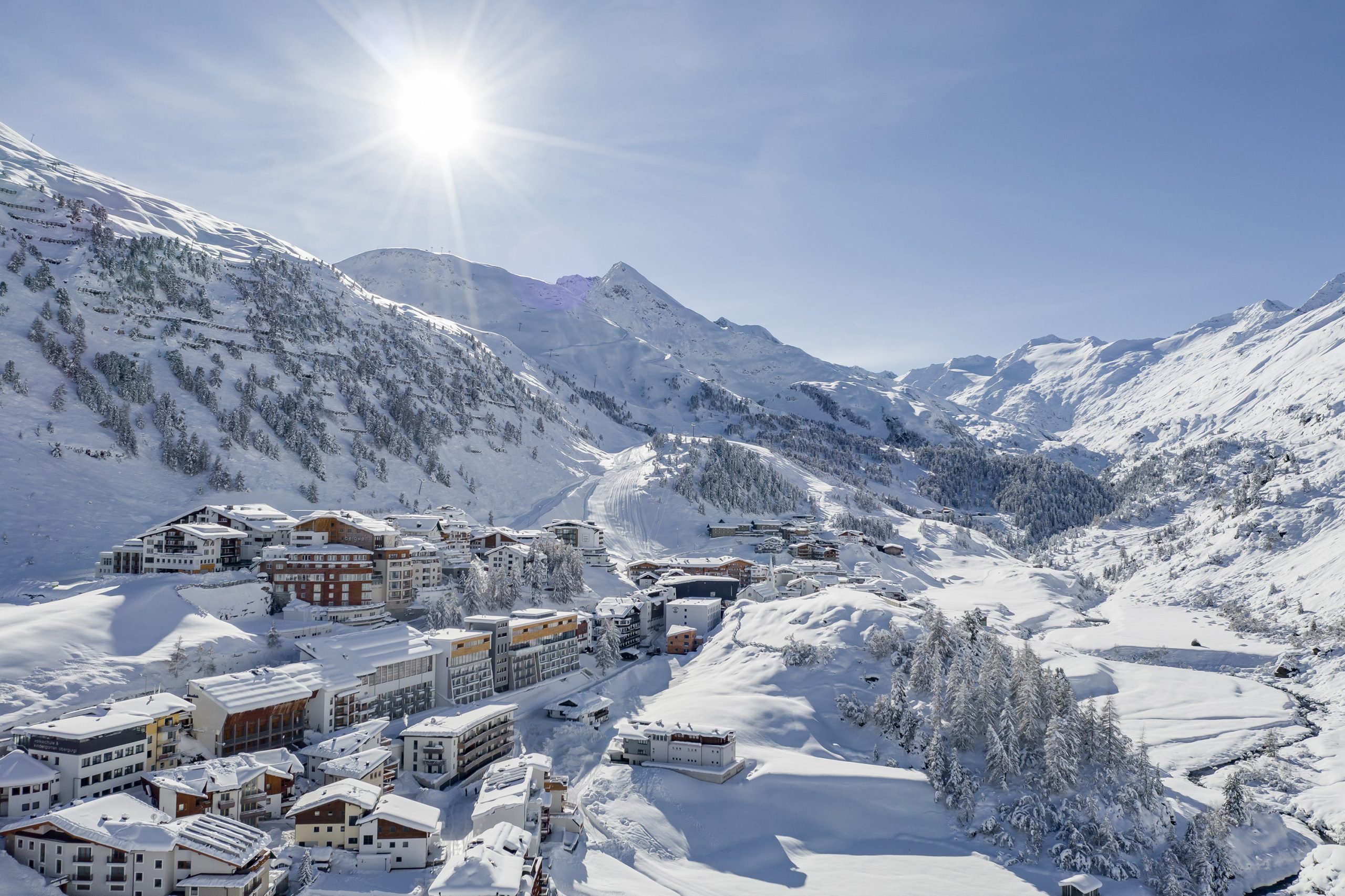
Obergurgl ist ein Dorf mit 420 Einwohnern im Ötztal, im Herzen der Tiroler Alpen.
Ein stabiler Tourismusfluss über das ganze Jahr hinweg hält den Ort mit der restlichen Welt in Verbindung. Die stetig gestiegene Nachfrage nach Unterkünften für Gäste und Saisonarbeitskräfte hat diese abgelegene Gegend in den letzten Jahrzehnten geprägt und belebt.
Projektaufgabe war die Entwicklung von Wohneinheiten für Beschäftigte im Tourismussektor.
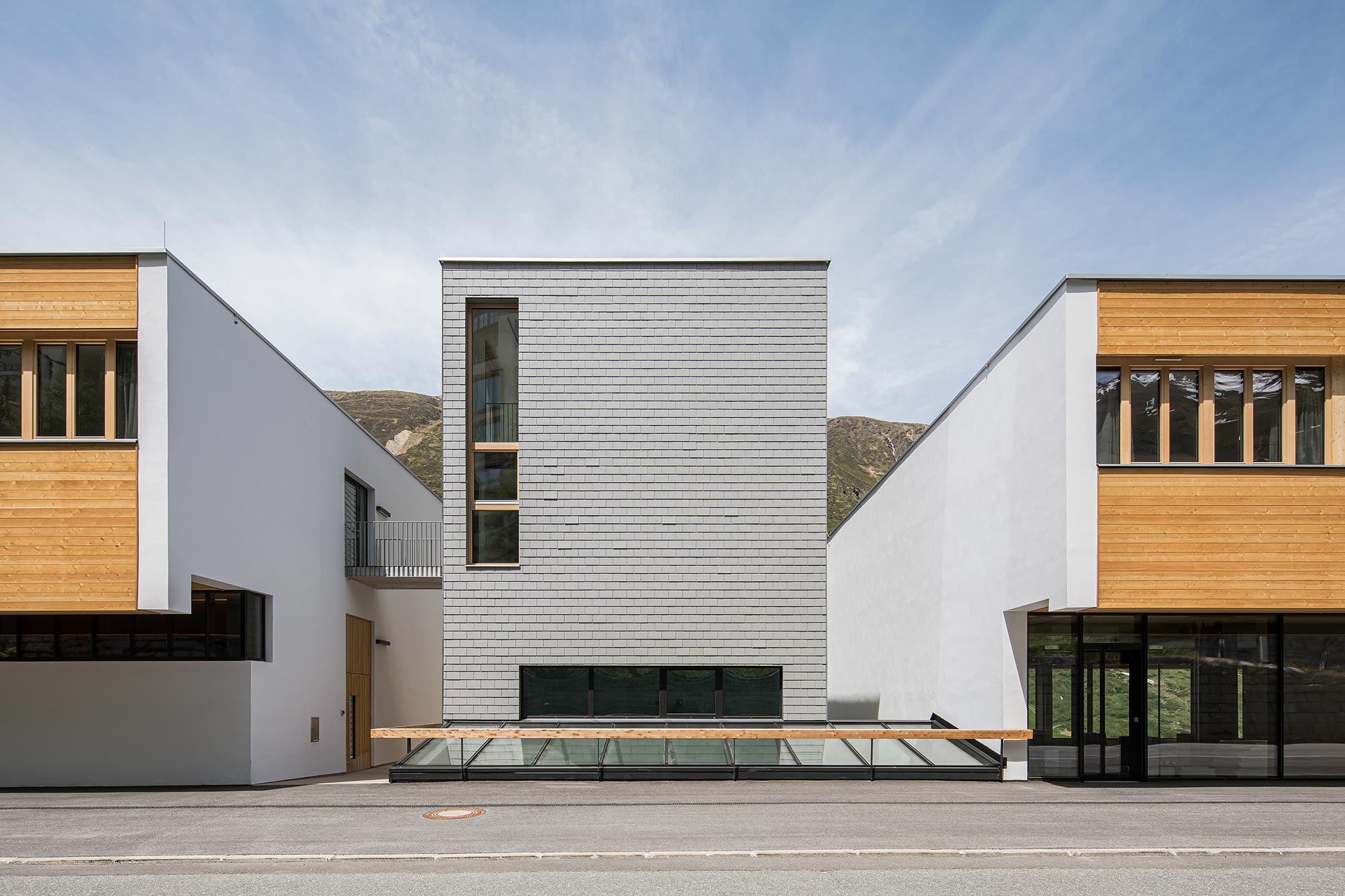
Die Lage des Grundstücks – ein steiler Hang zwischen zwei Straßen, die ins Ortszentrum führen – stellte jedoch eine gestalterische Herausforderung dar. In bewusster Auseinandersetzung mit dem Kontext entwarfen wir zwei längliche Baukörper, die durch ein zentrales Element verbunden sind. Die Hauptorientierung nach Westen, bietet große Öffnungen, Sonnenlicht und Panoramablicke ins Tal.
Auf der Ostseite, zur höher gelegenen Gurglerstraße hin, fügt sich das Gebäude in die bestehende Straßenstruktur ein und wirkt von dort aus nur zweigeschossig. Von hier aus sind ein Restaurant, einige Geschäfte sowie private Wohnungen direkt zugänglich.
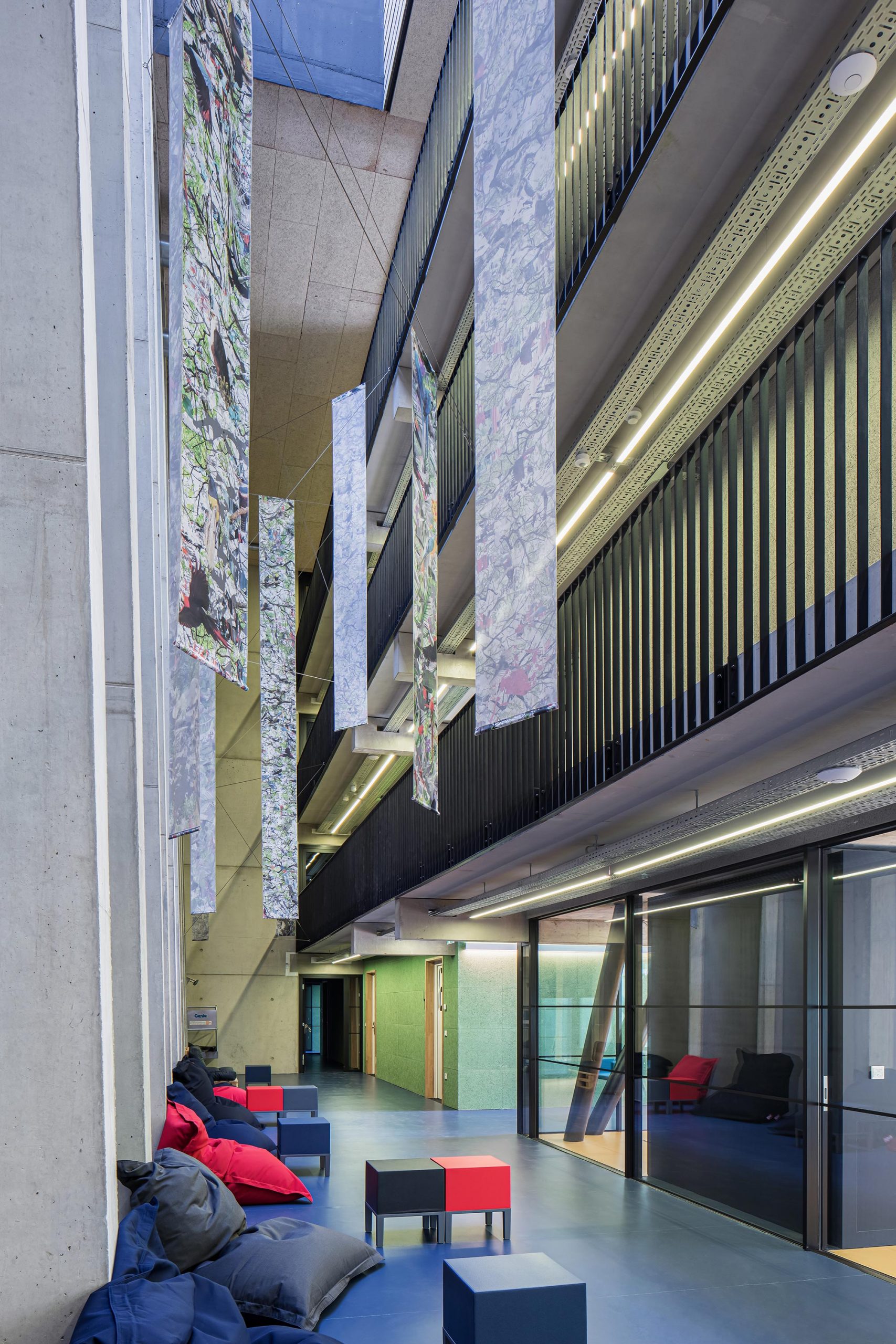
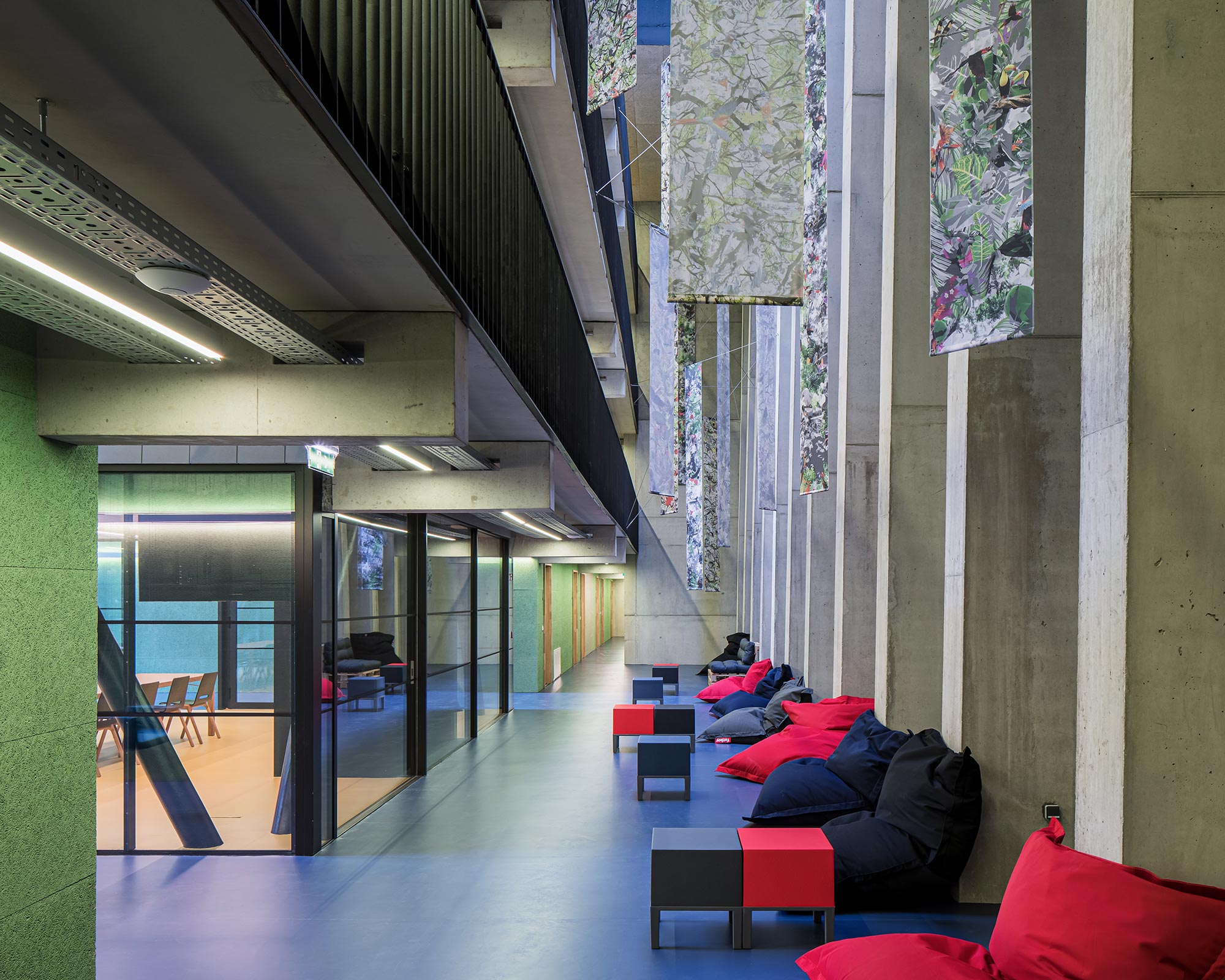
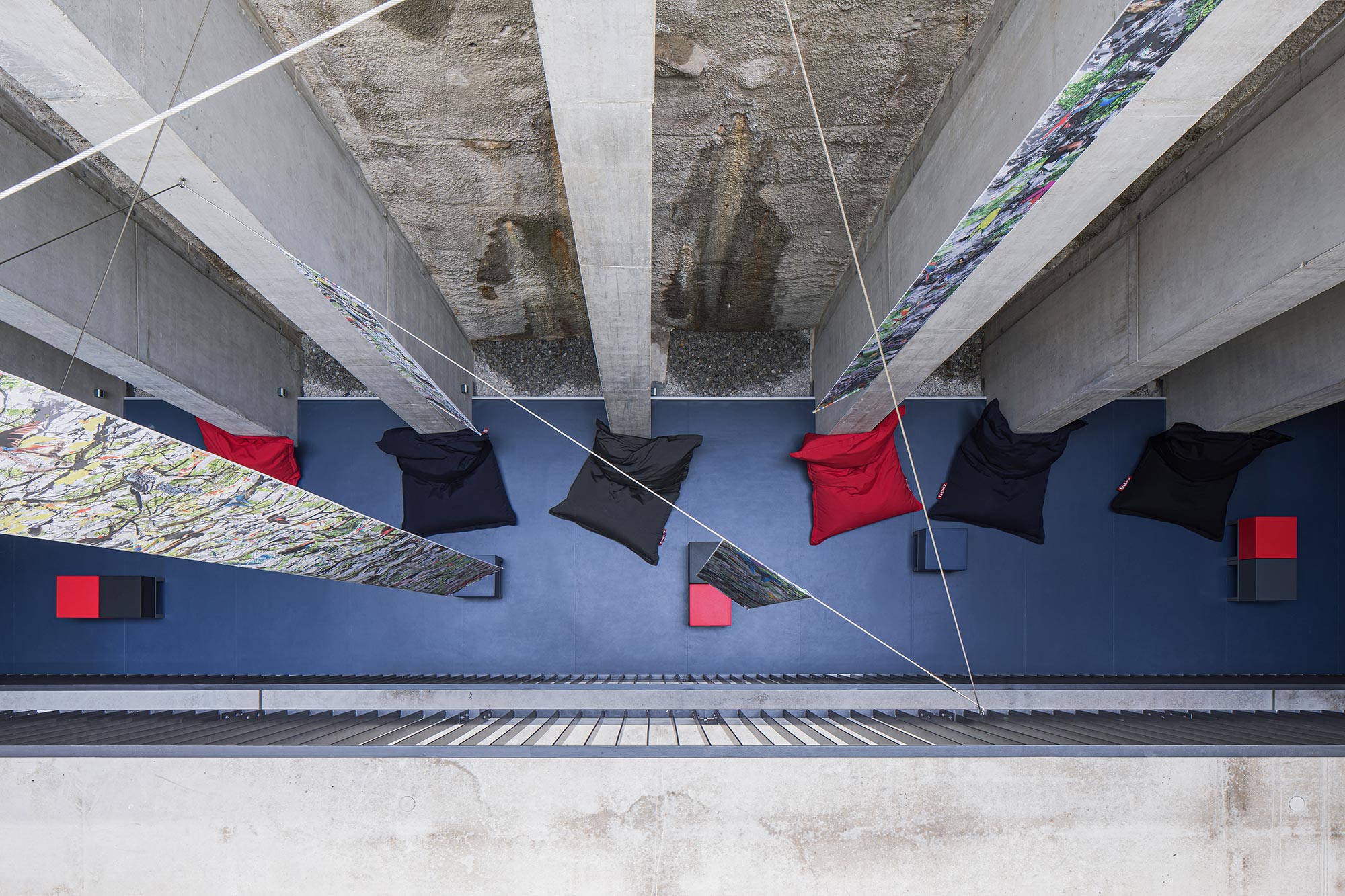
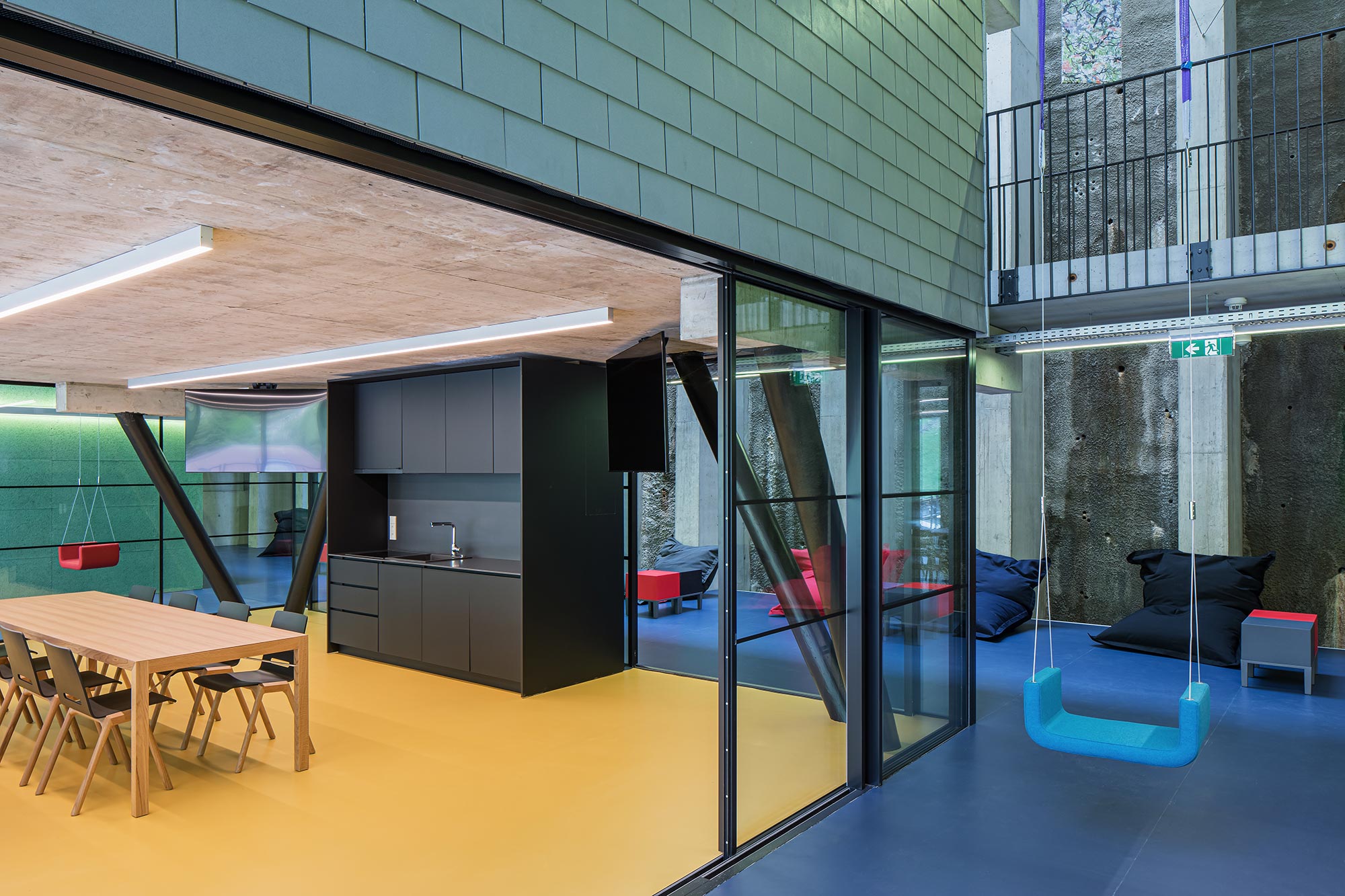
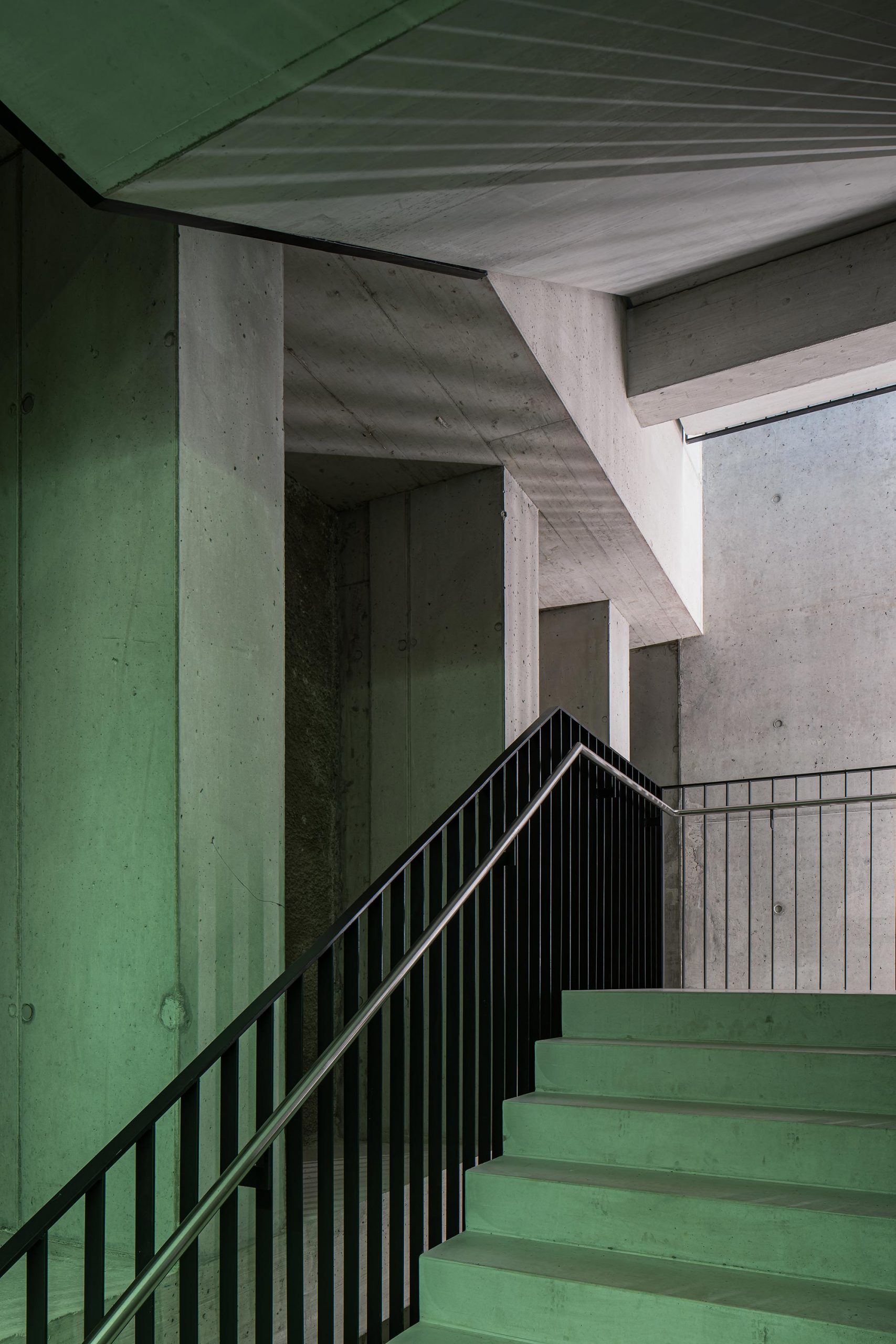
Die 87 Wohneinheiten, die von der Westseite aus erschlossen werden, verteilen sich auf vier Stockwerke und verfügen über zwei Parkebenen. Alle horizontalen und vertikalen Erschließungen verlaufen in einer viergeschossigen Halle zwischen dem Wohnvolumen und dem steilen Hang. Diese Halle wurde mit Aufenthaltsbereichen ausgestattet und dient als Treffpunkt für die Saisonarbeiter.
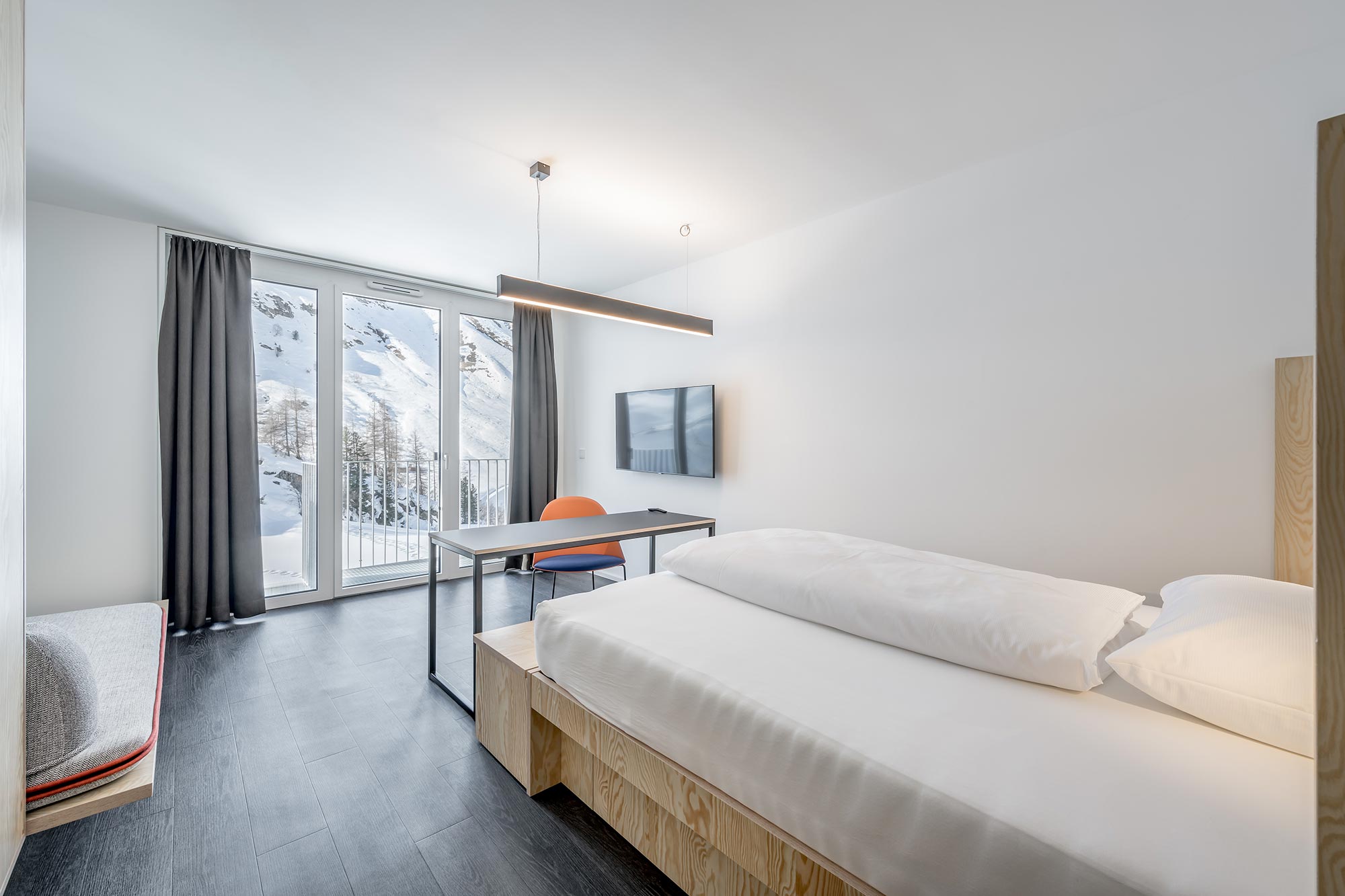
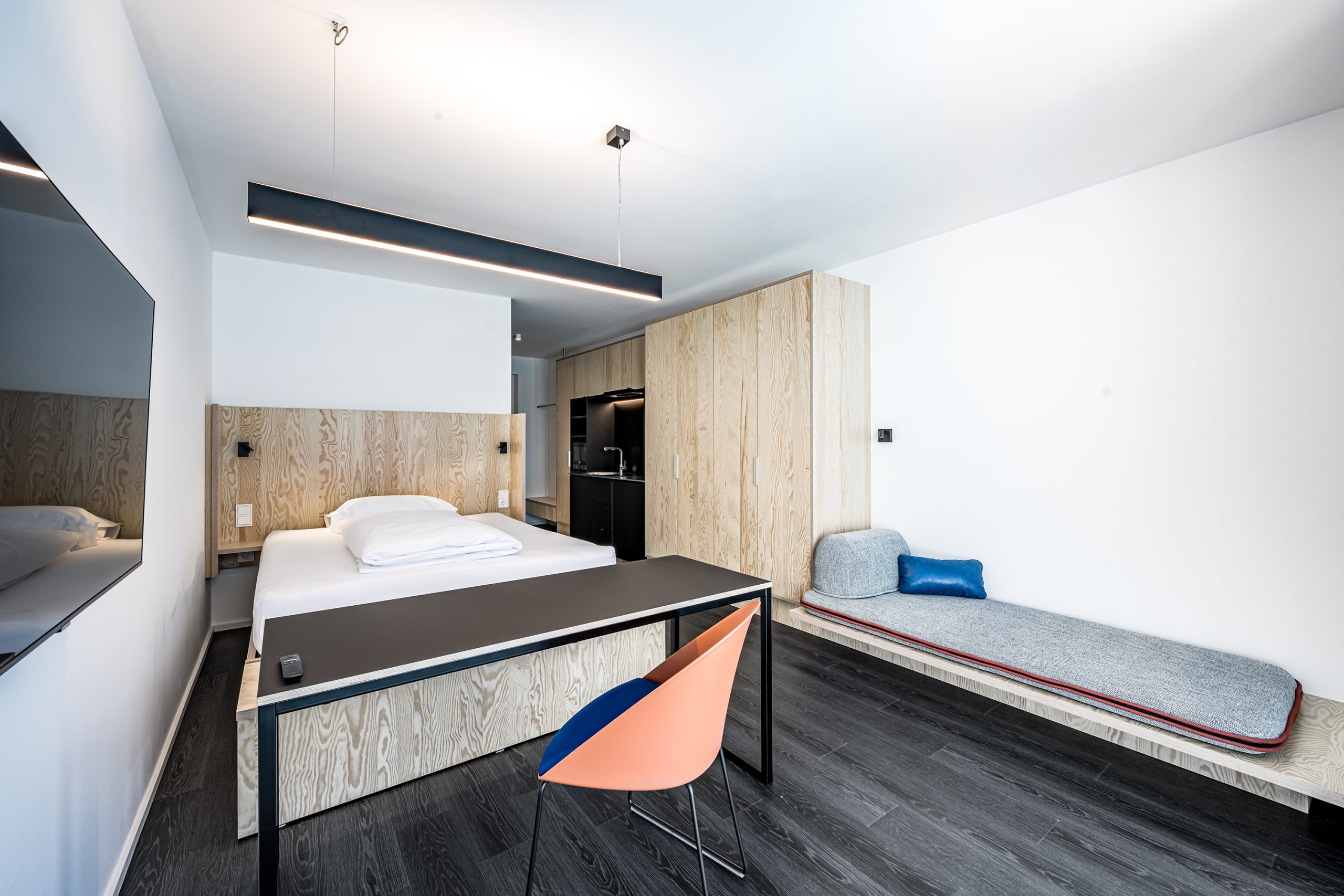
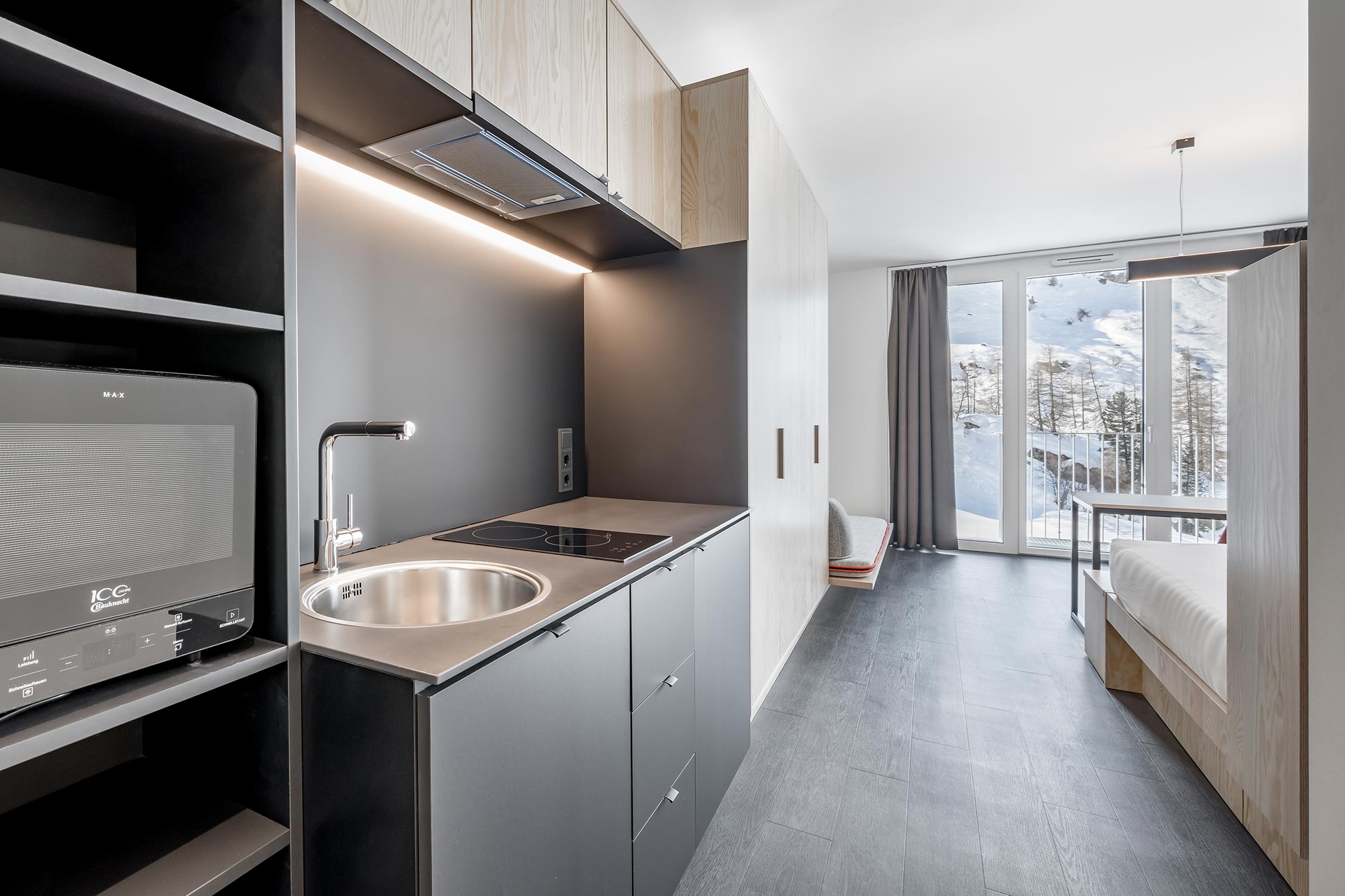
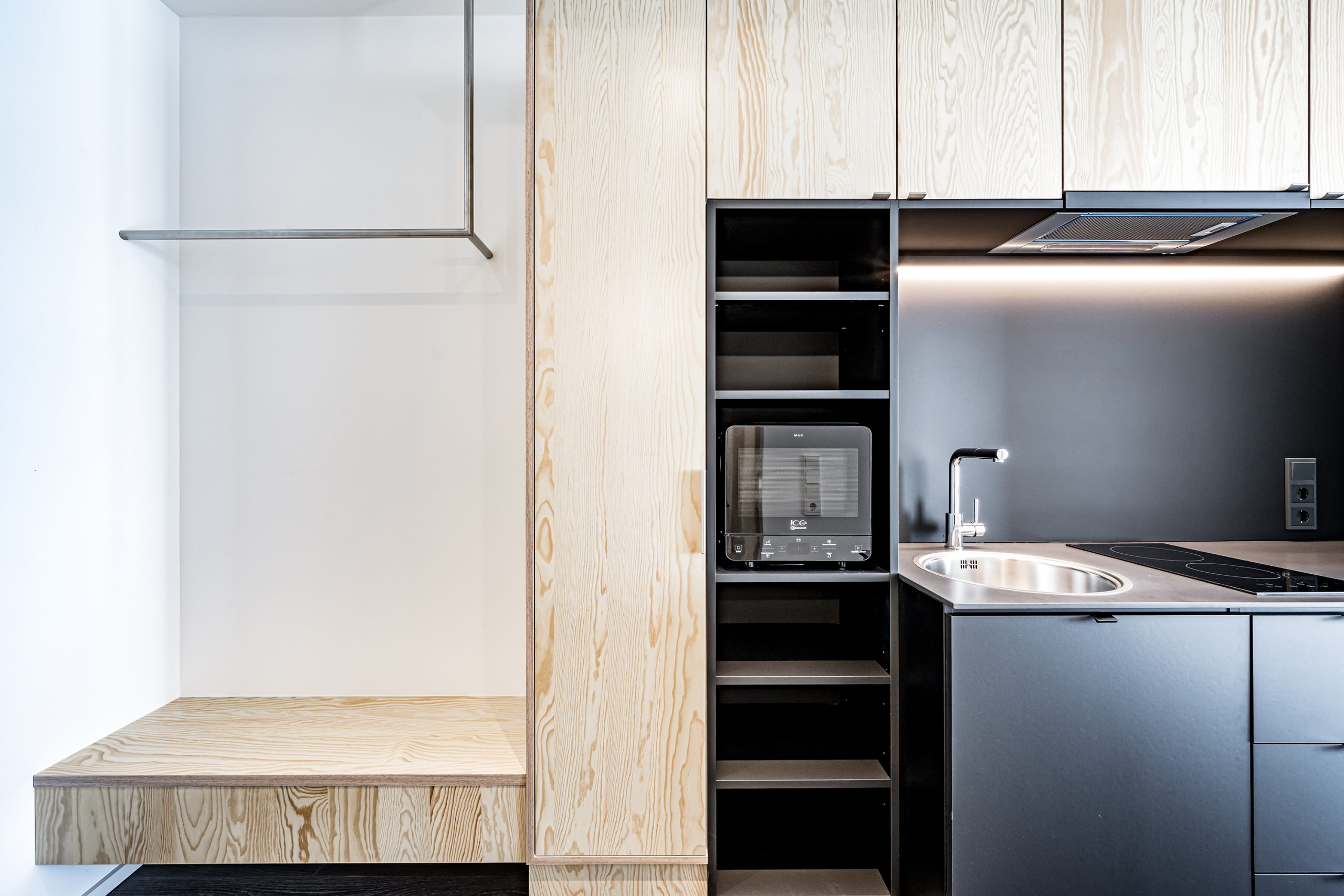
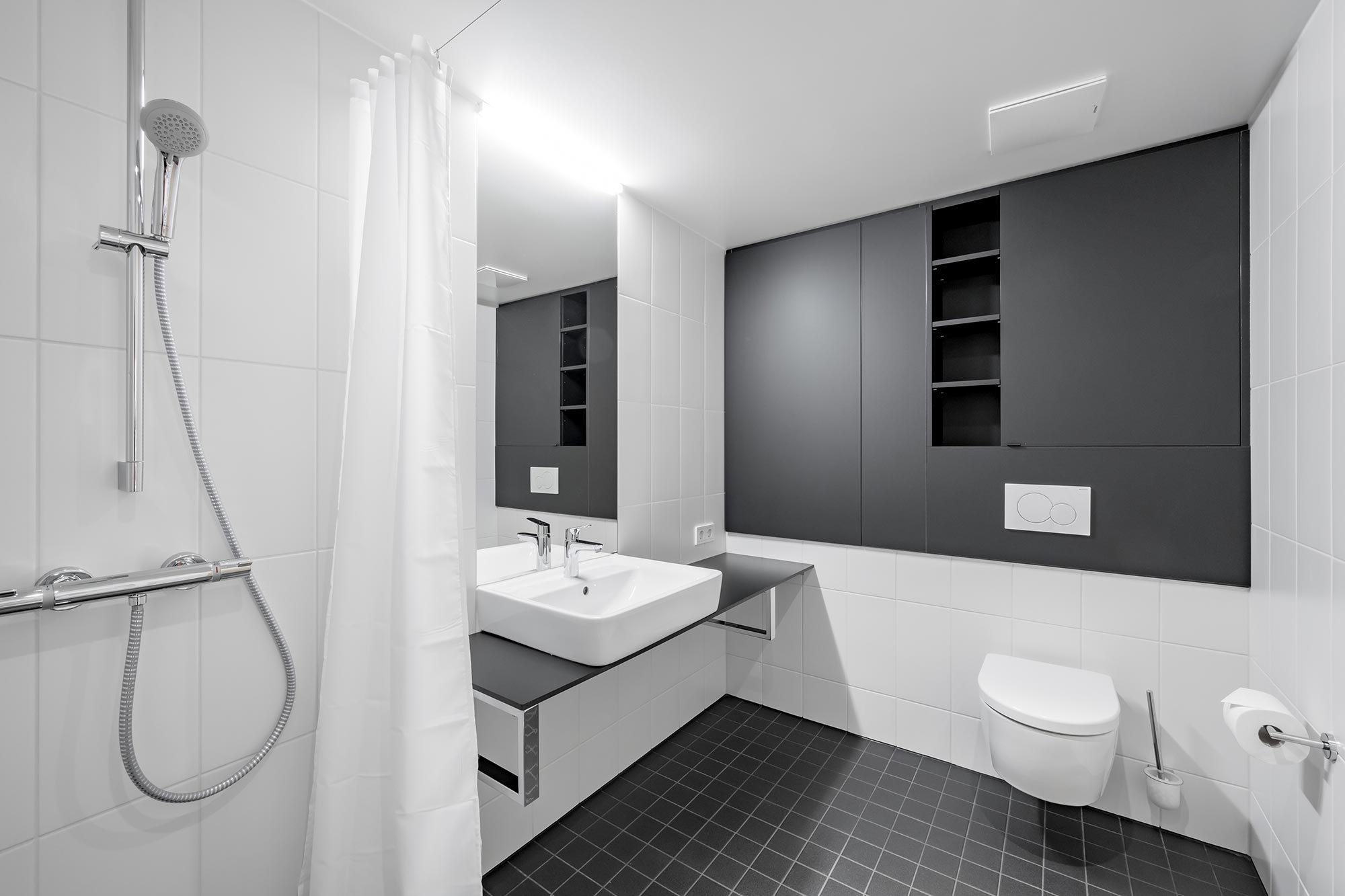
Die etwa 30 m² großen Wohnungen sind minimalistisch und dennoch komfortabel eingerichtet. Sie sind eigenständig und verfügen über einen offenen Wohn-/Schlafbereich, ein Bad, eine Kochnische sowie genügend Stauraum und Rückzugsmöglichkeiten. Besonders geachtet wurde auf eine multifunktionale Nutzbarkeit der Möblierung und den Einsatz natürlicher Materialien.
... weiter lesen
English version
Seasonal workers‘ living complex
Obergurgl, Ötztal Valley, Tyrol, Austria
Obergurgl, a village in the heart of the Tyrolean Alps with a population of 420 and an altitude of 1,930 m, is the highest parish in Austria.
Steady tourism throughout the year keeps the village connected with the rest of the world. Over the last few decades, the demand for guest and seasonal workers‘ accommodation has steadily increased, shaping and revitalising this remote area.
Our task was to develop residential units for tourism industry employees.
However, the location – a steep, six-storey-high slope between two streets leading to the town centre – posed a significant challenge to the design. In response, we designed two wings extending from a central body. The main orientation faces west, where wide openings capture sunlight and offer the best views of the mountains.
From the east, on the elevated Gurglerstrasse, the building’s volume extends the existing street profile, appearing only two storeys high and providing direct access to a restaurant, shops and a few private dwellings. The 87 residential units for the workers, accessible from the west, have been stacked on four floors and include two levels of parking. All horizontal and vertical connections occur in a four-storey hall between the residential volume and the steep slope. Rather than being just a ‘residual space’, the hall is equipped with recreational areas, seating and resting corners. Its purpose is to provide a gathering point for seasonal workers, fostering social interaction despite their busy working schedules.
Each 30 m² dwelling is an independent and minimalist unit, yet fully equipped with an open living/sleeping area, a bathroom, a kitchenette, storage space, retreat niches and a large bed. The multifunctional furniture can be easily adapted for different uses. The generous use of natural materials creates a cosy atmosphere. Full-height windows and terraces provide plenty of daylight and relaxation opportunities.